
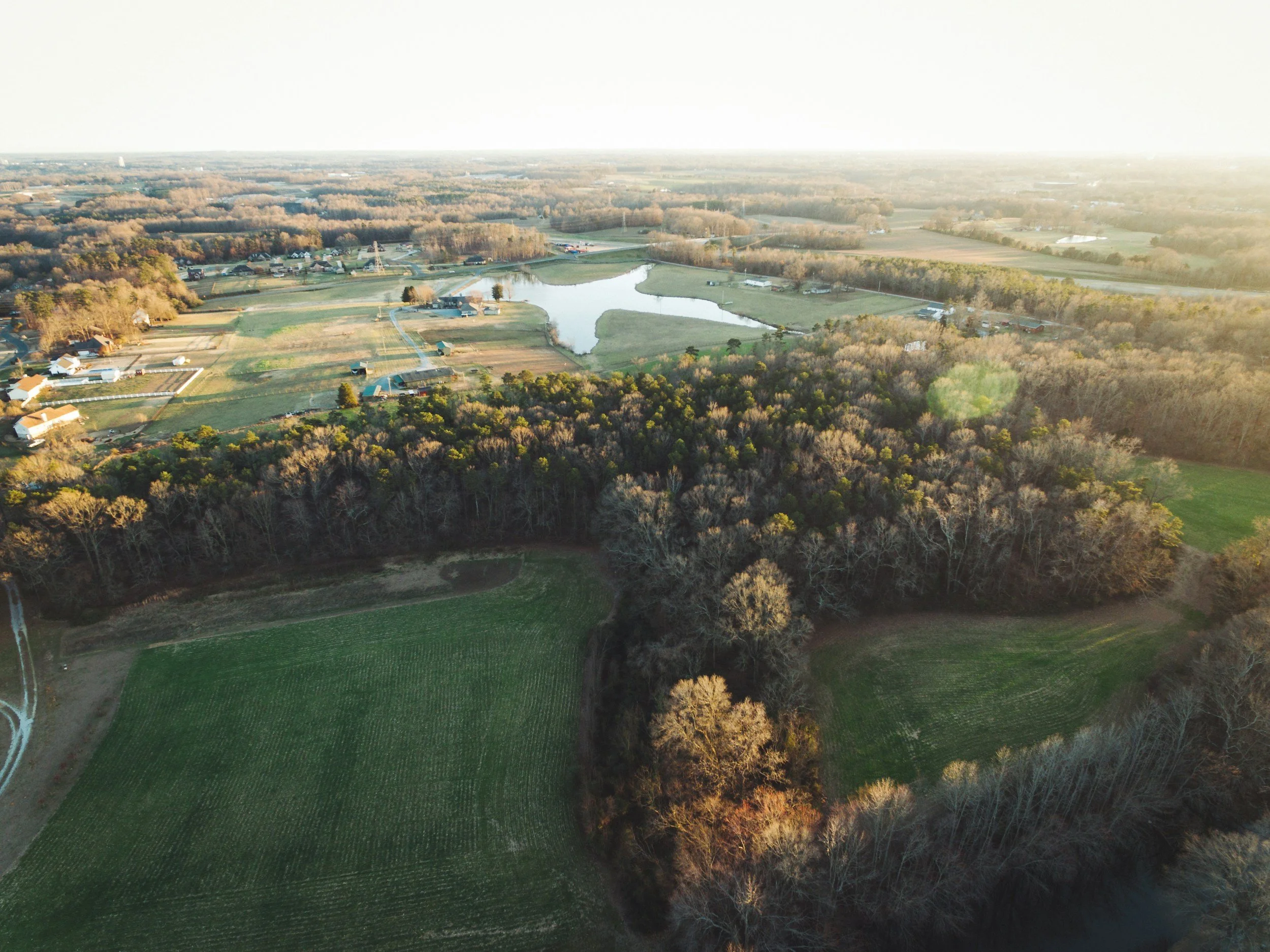
Land & Property Planning
Site-Based Planning for Acreage & Residential Properties
in Upstate South Carolina
Clarity on how your land should be used
— before building, clearing, or planting.
What Land & Property Planning is for…
Land & property planning is a focused, site-based service centered on clarity before long-term changes are made.
It clarifies how the property naturally functions — practically, environmentally, and spatially — before committing to building locations, clearing, planting, or infrastructure.
Most clients contact me before they build, plant, or hire contractors — so they get the layout right the first time.
Rather than producing a finished landscape design, this step establishes the framework all future decisions rely on: where activity belongs, what should remain undisturbed, and how the property can evolve over time.
Planning is especially valuable when decisions will be difficult to reverse, such as placing structures, establishing access, managing drainage, or determining where productive spaces should live.
Many projects begin with land planning and later move into garden consulting or full landscape design once the property framework is established.
Is Land & Property Planning the right fit?
Land & property planning is most useful when upcoming decisions will shape how the property functions long-term.
This is a good fit if you:
Are preparing a new property and want to make informed layout decisions
Want guidance before placing structures, access routes, or productive spaces
Prefer thoughtful sequencing over trial-and-error clearing or planting
Want future gardens and landscapes to fit the land rather than fight it
Are considering long-term use such as food production, habitat, or phased development
This may not be the right fit if you:
Are ready to move directly into a detailed planting design
Primarily want plant selection or aesthetic recommendations
Are looking for routine maintenance or installation services
Need ongoing coaching rather than planning guidance
You don’t need to know exactly what you want to build — planning clarifies what the property supports first.
How Land & Property Planning works…
Land & property planning follows a focused process designed to understand how the site functions before long-term decisions are made.
Initial conversation
We begin with a brief conversation to understand your goals, intended use of the property, and which upcoming decisions need clarity.On-site evaluation
The session takes place on-site and focuses on reading the land — observing water movement, sun exposure, access patterns, existing vegetation, and practical constraints that influence placement.Direction for layout & sequencing
You leave with a clear sense of where activity belongs, what should remain undisturbed, and the order future steps should occur — whether that leads into design, phased development, or independent planning.
Understanding how the property can evolve…
One of the most common reasons clients seek land & property planning is to determine how different uses can fit the site — before committing to placement or development.
During planning, we often clarify one or more of the following:
Building & Access Placement
Before structures or infrastructure are added, the site needs to be read as a whole system.
Planning helps determine:
Appropriate locations for homes, outbuildings, and work areas
Access routes that function year-round
Areas to avoid due to drainage, exposure, or long-term limitations
How early placement decisions affect everything that follows
Productive Spaces
Many properties are intended to support food production, but success depends on correct placement and scale.
Planning helps determine:
Where gardens, orchards, or growing areas naturally succeed
How sun, slope, and water influence productivity
Realistic size and phasing over time
How productive areas connect to daily life and maintenance
Ecological and Low-Intervention Areas
Not every part of a property should be actively managed. Some areas perform best with minimal disturbance.
Planning helps determine:
Which areas should remain wooded, buffered, or naturalized
Opportunities for habitat, resilience, and reduced maintenance
How managed and unmanaged spaces support each other
Long-term stewardship expectations
Land planning clarifies how different parts of the property relate — so future design and implementation follow a clear structure rather than trial and error.
How Land Planning fits with my broader work.
Land & property planning is designed to meet you at the earliest stage — when decisions about the property itself are still open.
For some clients, planning becomes the starting point for a comprehensive landscape design. Others use it to guide phased development, implementing areas gradually with clarity about long-term structure.
Because the layout decisions are established first, future gardens, plantings, and managed spaces can evolve naturally rather than needing to be reworked later.
Planning may lead into design, coaching, or implementation support — or simply provide the confidence to move forward independently.
Across all services, the common thread remains the same: thoughtful decisions early, and landscapes that function well over time.
Land & Property Planning FAQs
What is land & property planning?
Land & property planning is a focused, site-based service that clarifies how a property should function before long-term changes are made.
It evaluates layout, water movement, sun exposure, access, and use patterns to establish a clear framework for future decisions — whether that involves building placement, productive spaces, or phased landscape development.
The goal is not to produce a finished planting plan, but to ensure that future work is grounded in how the land naturally performs.
How is land planning different from landscape design?
Land planning comes before detailed design.
While landscape design focuses on plant selection, spatial composition, and installation, land planning establishes the structural decisions that design relies on — where activity belongs, what should remain undisturbed, and how different parts of the property relate.
For larger properties, beginning with planning helps prevent costly revisions and ensures design decisions align with long-term goals.
What do I receive after a land planning session?
You leave with clear direction on placement, priorities, and sequencing.
This may include annotated site notes, recommended zones for specific uses, and guidance on which decisions should occur first. Some clients move directly into a comprehensive design after planning, while others implement gradually over time.
The outcome is clarity — not guesswork.
What happens after land planning?
Land & property planning establishes a clear foundation for future decisions.
From there, projects often move naturally into design, coaching, or phased implementation as the property evolves — though some clients simply use the clarity to move forward independently.
Planning defines direction first so later work is intentional rather than reactive. This step often prevents revisions, relocation, and unnecessary installation costs later.
Land planning is most valuable when:
Building, clearing, or adding infrastructure is being considered
The long-term use of the property is still undecided
Decisions would be costly or difficult to reverse
If you’re thinking through how your property should evolve over time, land & property planning offers a clear place to begin — before costly changes are made.
Initial Planning Conversation